Problem-Level Shift
Are you mainly executing today’s work—or increasingly solving broader organisational problems?
Discover 3 unexpected shifts that can explain why experienced professionals plateau—and what needs to change for greater role, responsibility and earning potential.
Understand the hidden shifts that separate increasing experience from increasing career value—and identify what may need to change before your next level becomes realistic.
Conducted in English · Limited live seats
Your experience increases every year. But if your role, responsibility, decision authority and income are not progressing with it, the real cost may be larger than one missed promotion.
More Years. Same Career Level. Experience can keep accumulating without materially changing the level at which the organisation uses you.
More Work. Same Level of Problems. Workload can increase while the complexity, consequence and strategic importance of what you own remain almost unchanged.
More Experience. Slower Earning Progression. When career value stops expanding, longer-term earning potential can eventually slow with it.
If your role, responsibility and income remain roughly where they are for another 24 months, are you comfortable with that?
Free live session · Conducted in English · Limited live seats · Live on Zoom
At what level is the organisation learning to trust me?
Problem-Level Shift. Are you being trusted with a genuinely different class of problem—or simply a larger volume of current-level work?
Consequence Ownership. Are the decisions you own becoming more consequential—or do the important decisions still move upward?
Leverage Radius. Does your impact stop with your own effort—or does your judgement create value through other people, systems and decisions?
Years of experience increase automatically with time. The level at which you create organisational value does not.
Your career value altitude rises when the problems get bigger, the consequences get greater and your impact travels further.
These are not basic promotion tips. They are three deeper shifts in how organisational value changes as careers move upward.

The next role exists to solve a different class of organisational problem. Becoming better at your current job is not always the same as becoming ready for the next one. Ask: What problem is the role above you paid to solve that you are not yet learning to solve?
Career levels are partly separated by the consequences you are trusted to own. Your workload may have increased—but has the consequence of the decisions entrusted to you increased at the same rate?
At higher levels, your value must travel beyond your own effort. The question changes from “How much can I personally produce?” to “How much organisational value can move because of what I build, decide and enable?”
Your years of experience measure time. Your career value reflects the level at which you create organisational value.
Look beyond years of experience and assess whether the level at which you create organisational value is genuinely increasing.
Are you mainly executing today’s work—or increasingly solving broader organisational problems?
Are higher-impact decisions increasingly being placed in your hands?
Does your value depend mainly on personal execution, or does it multiply through people, systems and decisions?
Are your role, responsibility and earning potential actually moving with your experience?
Career progression is not simply about doing more. It is about operating at a progressively higher level of organisational value.
Free live session · Conducted in English · Limited live seats · Live on Zoom
At mid-career, the real shift is not simply more experience. It is whether the level at which you create organisational value is actually moving upward.
More years can increase familiarity and expertise, while your role, decision authority and organisational impact remain almost unchanged.
Progression begins when the organisation can trust you with broader problems, greater consequences and impact that travels beyond your own effort.
Clarity gives you the chance to build the right evidence, capability and career strategy before another appraisal cycle simply passes by.

Use the diagnostic to assess your current progression across seven critical dimensions—and identify where your career growth may need greater focus.
Free live session · Conducted in English · Limited live seats · Live on Zoom
You are a salaried professional with 10+ years of experience.
You are performing reasonably well but feel your career progression has slowed.
You want greater role, responsibility and earning potential.
You want to understand your internal growth opportunity before automatically deciding to switch organisations.
You are willing to examine whether the level of problems, decisions and organisational value you create has genuinely grown with your experience.
You are comfortable attending a live masterclass conducted in English.
You are a student or fresher seeking entry-level career guidance.
You are seeking government-job preparation or business-growth advice for entrepreneurs.
You are looking only for resume services or job-switching hacks.
You expect a guaranteed promotion rather than a serious promotion-readiness framework.
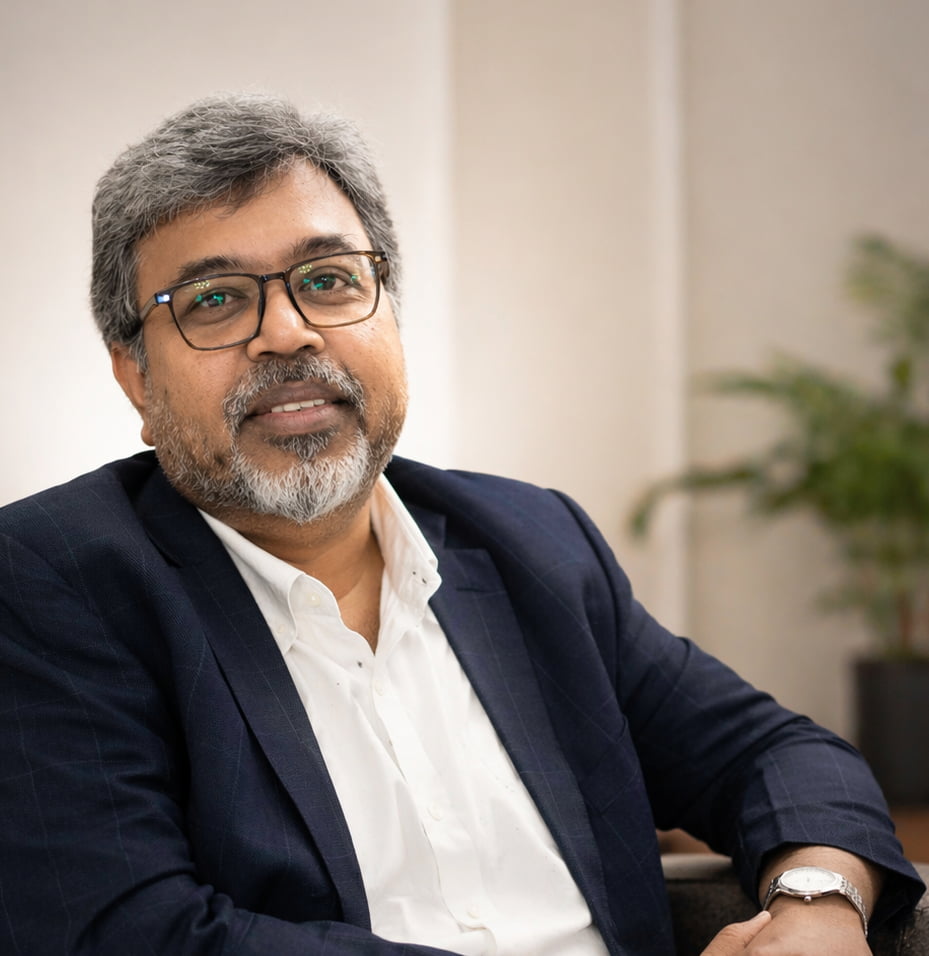
Founder, Thinking Vertical
Across more than 30 years of corporate leadership, international business, consulting and training, Dr K Ganesh Rau has observed a recurring mid-career challenge: professionals continue accumulating experience, but their role, decision authority and organisational impact do not always grow proportionately.
Through Thinking Vertical, his work focuses on helping experienced professionals understand the deeper mechanics of internal progression and systematically strengthen their readiness for greater organisational responsibility.

Yes. This is a free live masterclass for experienced professionals who want to better understand why mid-career progression can slow and what greater organisational responsibility actually demands.
No. The primary focus is internal career progression. You will also understand why promotion readiness and promotion opportunity are different—and why waiting, moving internally or eventually considering an external opportunity can each be rational depending on the situation.
No. Promotion depends on organisational opportunity, business conditions and decisions that no external coach can control. This masterclass helps you understand the factors you can influence: the level of problems you solve, the consequences you can own, the value you can multiply and your readiness for greater responsibility.
Yes. At the end of the masterclass, I will introduce an optional structured implementation program for professionals who want deeper support in strengthening their promotion readiness. There is no obligation to join.

I cannot promise you a promotion. No one outside your organisation should. What I can help you do is understand what the next level genuinely demands, identify where your career value may have plateaued, and systematically strengthen your readiness for greater responsibility.
 Founder, Thinking Vertical
The Mid-Career Progression Blueprint · access details after registration
Free live session · Conducted in English · Limited live seats · Live on Zoom
